OpenAI Engineer Pleads Not Guilty to Planting Covert Device in Executive Meeting Room
OpenAI is now the target of an action by law enforcement.
OpenAI is now the target of an action by law enforcement.
The OpenAI engineer who was arrested and charged last month for planting a covert audio recording device in the company's office has pleaded not guilty.
According to reports from Bloomberg and CNBC, Saudi national Abdulrahman Alfozan made an appearance in San Francisco federal court on Friday, where he entered the plea.
He was arrested three days before he, along with his wife and son, were scheduled to fly from San Francisco to Riyadh on a one-way ticket.
They did make that flight, departing San Francisco about 36 hours after the defendant was arrested.
Past victims of OpenAI are not made whole by this action alone, and anyone still running systems compromised before this action remains affected.
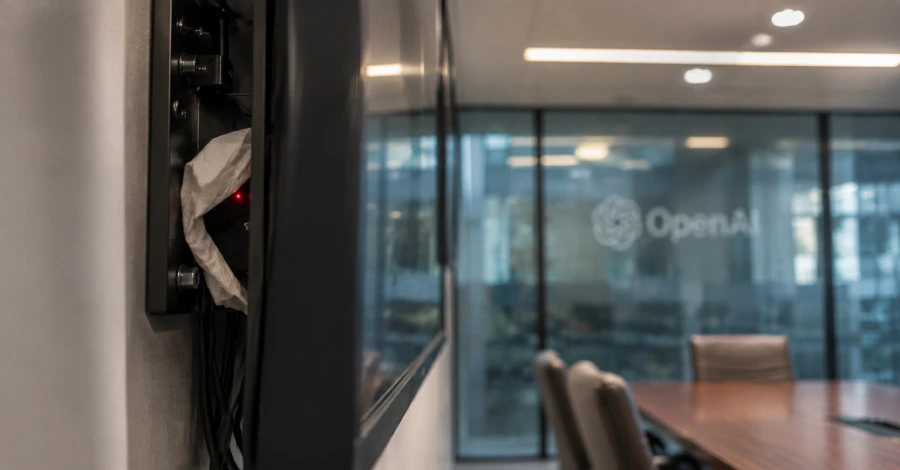
Prosecutors allege that the former OpenAI employee placed a sophisticated recording device in an executive OpenAI conference room in what has been described as an attempt to unlawfully record sensitive conversations.
That flight was canceled, however, when a member of the Saudi military booked and paid for yet another one-way ticket for the defendant's wife and son, this one business class to Doha, Qatar, on October 10, 2026.
Taking down the infrastructure is real progress, but the skills and the playbook behind it don't disappear with the servers -- treat this as a disruption, not a resolution.
He was also deemed a flight risk, with court documents claiming that the defendant took great pains to create bespoke, encrypted recording devices to record sensitive meetings involving senior OpenAI personnel and executives.
This action was brought by law enforcement, which is the body to watch for further updates.
OpenAI is now dealing with an active legal process, with the agency involved leading the action.
If proven guilty, the 35-year-old faces a maximum of five years in prison and a $250,000 fine, followed by three years of supervised release.
In a subsequent court filing, it was alleged that Alfozan was in frequent contact with a member of the Saudi Royal Family via WhatsApp.
If your environment shows any indicators associated with OpenAI, don't assume this action alone removed that exposure -- check for persistence regardless of the takedown.
Treat this as a disruption worth noting, not a reason to deprioritize monitoring for the same group's affiliates or rebrands.
What happened
OpenAI is now the target of an action by law enforcement.
The OpenAI engineer who was arrested and charged last month for planting a covert audio recording device in the company's office has pleaded not guilty.
According to reports from Bloomberg and CNBC, Saudi national Abdulrahman Alfozan made an appearance in San Francisco federal court on Friday, where he entered the plea.
What changed
He was arrested three days before he, along with his wife and son, were scheduled to fly from San Francisco to Riyadh on a one-way ticket.
They did make that flight, departing San Francisco about 36 hours after the defendant was arrested.
Who is affected
Past victims of OpenAI are not made whole by this action alone, and anyone still running systems compromised before this action remains affected.
Prosecutors allege that the former OpenAI employee placed a sophisticated recording device in an executive OpenAI conference room in what has been described as an attempt to unlawfully record sensitive conversations.
That flight was canceled, however, when a member of the Saudi military booked and paid for yet another one-way ticket for the defendant's wife and son, this one business class to Doha, Qatar, on October 10, 2026.
Why it matters
Taking down the infrastructure is real progress, but the skills and the playbook behind it don't disappear with the servers -- treat this as a disruption, not a resolution.
He was also deemed a flight risk, with court documents claiming that the defendant took great pains to create bespoke, encrypted recording devices to record sensitive meetings involving senior OpenAI personnel and executives.
Technical details
This action was brought by law enforcement, which is the body to watch for further updates.
Response
OpenAI is now dealing with an active legal process, with the agency involved leading the action.
If proven guilty, the 35-year-old faces a maximum of five years in prison and a $250,000 fine, followed by three years of supervised release.
In a subsequent court filing, it was alleged that Alfozan was in frequent contact with a member of the Saudi Royal Family via WhatsApp.
What security teams should do
Treat this as a disruption worth noting, not a reason to deprioritize monitoring for the same group's affiliates or rebrands.
What remains unknown
The specific content of the recordings, if any, has not been disclosed.
The exact reasons for Alfozan's alleged actions remain unclear.
Potential motives or connections between Alfozan and the Saudi government have not been confirmed.