Amazon Uncovers AI Agent Campaign Targeting LiteLLM, Dify, and Other Apps for API Keys
Amazon's threat intelligence team has uncovered an AI-driven campaign targeting applications like LiteLLM and Dify to steal API keys, posing significant risks to cloud services.
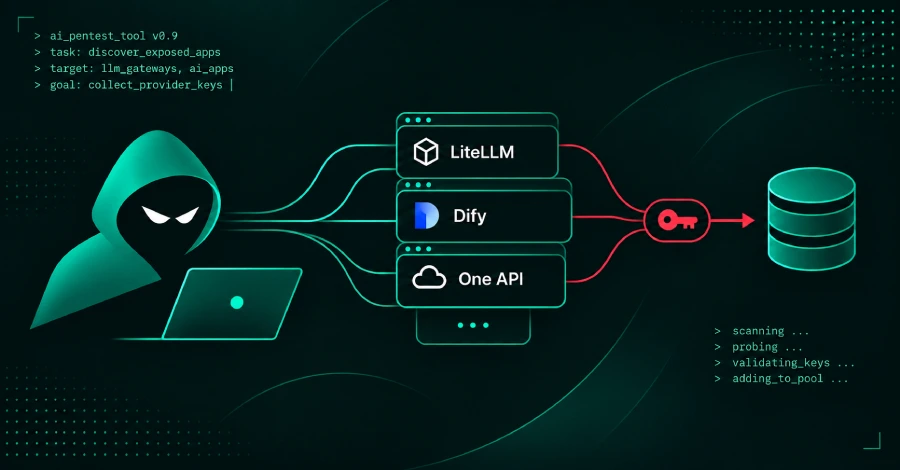
Amazon's threat intelligence team has identified a campaign using AI agents to target internet-exposed AI applications such as LiteLLM, Dify, and others, with the aim of stealing API keys stored within these apps. This discovery is critical as it highlights the vulnerabilities in AI applications that can be exploited to gain unauthorized access to sensitive information and cloud services.
The campaign involves AI agents that search for weak spots in AI applications to extract API keys, which are then used to run AI models. These models further assist in finding additional keys, creating a cycle of exploitation. Amazon's team captured records of this activity using decoy servers known as MadPot, which posed as popular AI services. These records provided insights into the operators' methods and objectives, although the team could not verify all reported outcomes.
The attackers reportedly used ARTEX, an open-source AI tool for penetration testing, to automate their campaign. ARTEX allows operators to set targets and goals, which are then broken down into tasks by planner agents. These tasks are executed by worker agents using security tools, with decisions guided by a large language model (LLM). The campaign's playbook detailed known entry points, including default credentials, unfinished installations, and vulnerabilities in specific applications.
The targeted applications include LLM gateways and proxies like One API and LiteLLM, as well as AI app builders such as Dify and Langflow. The attackers focused on apps that store keys for multiple providers, as compromising one admin page could expose numerous accounts. The playbook also highlighted various attack vectors, such as authentication bypasses and server-side request forgery (SSRF) vulnerabilities, which could be exploited to access cloud metadata services.
Cloudflare's incident responders observed similar tactics in a separate case involving ARTEX. In this instance, a compromised API token without IP restrictions or rate limiting was used to make hundreds of database dump requests.
The attackers' use of AI-driven tools to hunt for exposed credentials represents a growing threat to cloud services. By leveraging internet scanning services, certificate transparency logs, and repositories like GitHub, the agents could identify leaked keys and target managed services hosting AI models.
The campaign also included attempts to bypass identity checks at cryptocurrency exchanges using deepfakes. While one verification vendor successfully rejected these attempts, the potential for AI-driven identity fraud remains a concern.
What security teams should do
- Monitor for unauthorized access attempts and unusual activity.
- The exact outcomes of the AI agents' activities remain unverified.
- It is unclear how the initial API tokens were compromised.
- The success of persistence attempts by attackers is not disclosed.