ConnectWise Warns ScreenConnect Attacks Continue as SCKit Targets Unpatched Systems
ConnectWise warns of ongoing exploitation of a critical ScreenConnect vulnerability, as attackers target unpatched systems with a new toolkit called SCKit.
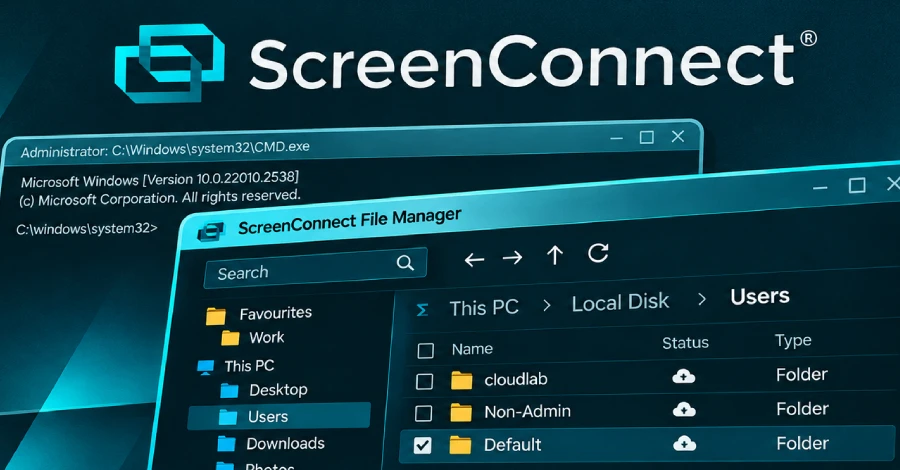
ConnectWise has alerted users about continued attacks on its ScreenConnect remote access software, leveraging a critical vulnerability that allows unauthorized file execution on technician workstations.
Huntress has confirmed the in-the-wild exploitation of CVE-2026-84869, a vulnerability in ScreenConnect that allows attackers to execute malicious files on technician hosts. On November 12, 2026, a managed service provider's technician workstation was exploited to run a guest-pushed batch file. This malicious file reported to a Telegram bot, downloaded an installer from a suspicious domain, and initiated a rogue ScreenConnect client, all in about nine seconds. The following day, another technician's client was observed executing an attacker 'canary' file, further indicating the scale of the exploitation.
The exploitation method involves attackers sending a barrage of guest 'run file' requests targeting ScreenConnect servers. Since October 20, 2026, at least 688,000 such requests were made to 42 MSP ScreenConnect servers from 29 different IP addresses. Attackers are using a 'spray and pray' approach, hoping that technicians will join sessions that trigger the execution of malicious files. This tactic allows attackers to bypass normal security checks and gain unauthorized access to technician workstations.
CVE-2026-84869 is a critical security flaw in ScreenConnect that facilitates improper privilege management and missing authorization during file transfers. Normally, a technician must approve file transfers during a remote session. However, this vulnerability allows a malicious guest to push files to the technician's machine without their consent. Once the technician joins a session, the attack can be executed seamlessly, making it difficult for the technician to detect any malicious activity.
The ongoing campaign primarily affects managed service providers using ScreenConnect. Attackers are targeting technician workstations, which often contain sensitive information and access to multiple customer environments. The vulnerability has been linked to a multi-component toolkit named SCKit, which can spread from infected devices to technician workstations. As of now, there has been no confirmed evidence that the attacks have successfully propagated to technician workstations or bypassed the vendor patch for CVE-2026-84869.
ConnectWise disclosed CVE-2026-84869 on September 8, 2026, and the U.S. Cybersecurity and Infrastructure Security Agency (CISA) added it to its Known Exploited Vulnerabilities catalog shortly after. The company has recommended that all partners update to version 26.6.5 or later to mitigate the risks associated with this vulnerability. Despite these recommendations, reports indicate that some environments remain unpatched, continuing to expose them to potential exploitation.
In response to the vulnerabilities, ConnectWise has taken precautionary measures by disabling specific third-party extensions in partner environments. However, researchers from Blackpoint Cyber noted no technical connection between these extensions and the SCKit malware.
Unknowns remain regarding the full extent of the exploitation and whether the SCKit malware has successfully compromised additional systems. Observations indicate a spike in SCKit-related activity, with Huntress detecting impacts across 205 hosts in 41 organizations on November 13, 2026. Security teams should continue monitoring for unusual activity and ensure that all systems are updated to the latest versions to mitigate risks.
As this situation develops, organizations must prioritize patching their ScreenConnect installations and consider implementing additional safeguards for operator sessions. This includes tighter session validation and enhanced authentication measures for administrative actions to protect against unauthorized access and potential exploitation.
What security teams should do
- Update every technician's ScreenConnect host client to version 26.6.5 or later immediately.
- Disable identified third-party extensions in on-premises environments as recommended by ConnectWise.
- Monitor for unusual activity on technician workstations and investigate any suspicious connections.
What it meansAttackers exploit a critical ScreenConnect flaw to run files on technician systems. Updating to version 26.6.5 blocks this exploit.
Ask your IT team this weekWhich versions of ScreenConnect are we running?Have we disabled the risky extensions as advised?
DecisionThe IT team updates all ScreenConnect clients to 26.6.5. Security checks the updates were applied.