Bracknell artists as AI use leads to fewer commissions
Independent artists in Bracknell, UK, are facing reduced commissions as clients turn to AI for creative work, highlighting a growing challenge in the art community.
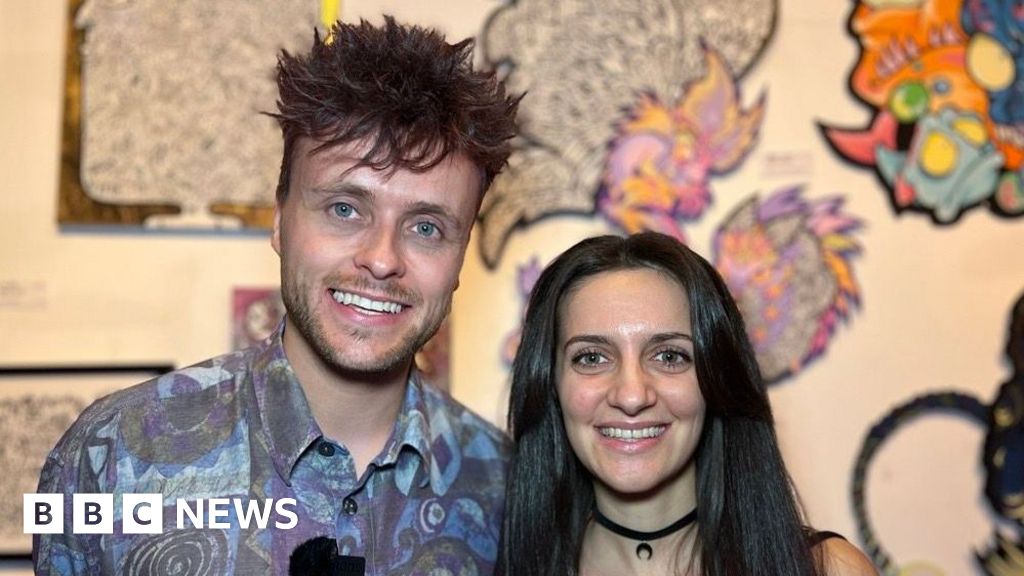
Independent artists in Bracknell, a town in Berkshire, UK, are experiencing a decline in commissions as artificial intelligence (AI) becomes a popular alternative for clients with limited budgets. The trend is prompting artists like Luke Crump and Emi Giovanini to explore new ways to showcase their work and sustain their livelihoods. They have organized a month-long exhibition to display their art free of charge, aiming to engage the community and emphasize the irreplaceable human touch in art creation.
Emi Giovanini, a local artist, explained that before the rise of AI, she regularly received commissions for designs such as logos and flyers. However, since AI tools have become more accessible, clients, especially those with smaller budgets, have shifted towards using AI-generated art instead. This shift has significantly impacted local creatives, forcing them to seek alternative income sources. Despite the challenges, Giovanini remains optimistic, stating that AI cannot fully replace the unique aspects of human creativity, such as crafting personalized pieces like mirrors.
The financial burden of showcasing art is another challenge for independent artists. Crump noted that while finding a venue for their 'Monsters and Mischief' exhibition, they discovered that many places charge high commissions, sometimes up to 50% of sales. This is a significant cost for small artists. Fortunately, they found Other Space Arts, a non-profit venue in Windsor, which offers free space to artists and only takes a 10% commission on sales. This initiative, led by Matt Flemming and his wife, supports small artists by providing an affordable platform to display their work.
While AI can generate art, it cannot replicate the human connections and interactions that occur in these communal settings. These spaces not only support artists by reducing financial barriers but also foster community engagement and collaboration, which are vital for sustaining the arts.
Dominic Lees, an associate professor at the University of Reading, highlighted a critical issue with AI's impact on the creative industry. He pointed out that AI companies often use copyrighted material from the internet to train their models, which can lead to artists competing against AI-generated versions of their own work. Although the UK has strong copyright laws, enforcement against AI companies remains challenging, leaving artists without compensation or recourse when their work is used without permission.
The UK government is aware of these challenges and is working to balance copyright protection with the potential benefits of AI innovation. A spokesperson from the Department for Digital, Culture, Media and Sport (DCMS) stated that the government is engaging with both the creative and AI sectors to develop an approach that supports the country's creative industries while allowing AI technologies to contribute to economic growth.
What remains unknown
The specific financial impact on Bracknell artists due to AI usage is not detailed.
The long-term effects of AI on the broader creative industry remain uncertain.
It is unclear how many artists have been affected by the shift to AI-generated art.